
AI product photography and advertising prompts
Build a product image around a clear subject, a deliberate composition and lighting that suits the material. These real examples show different approaches to beverage advertising, product presentation and food imagery. Open a full prompt or bring it straight into the workspace.
How to adapt these prompts
Define the product and composition
Describe the product shape, material and position first. Specify a close-up, overhead view or wider advertising scene, and leave space for campaign copy when needed.
Describe light and surface detail
Use concrete directions such as soft side light, controlled reflections or visible condensation. Change one element at a time so you can see how it affects the result.
Review before using a real product
For your own campaign, replace example brand references with your product. Check logos, labels, packaging and proportions carefully; generated images may change product details.
Real examples and complete prompts
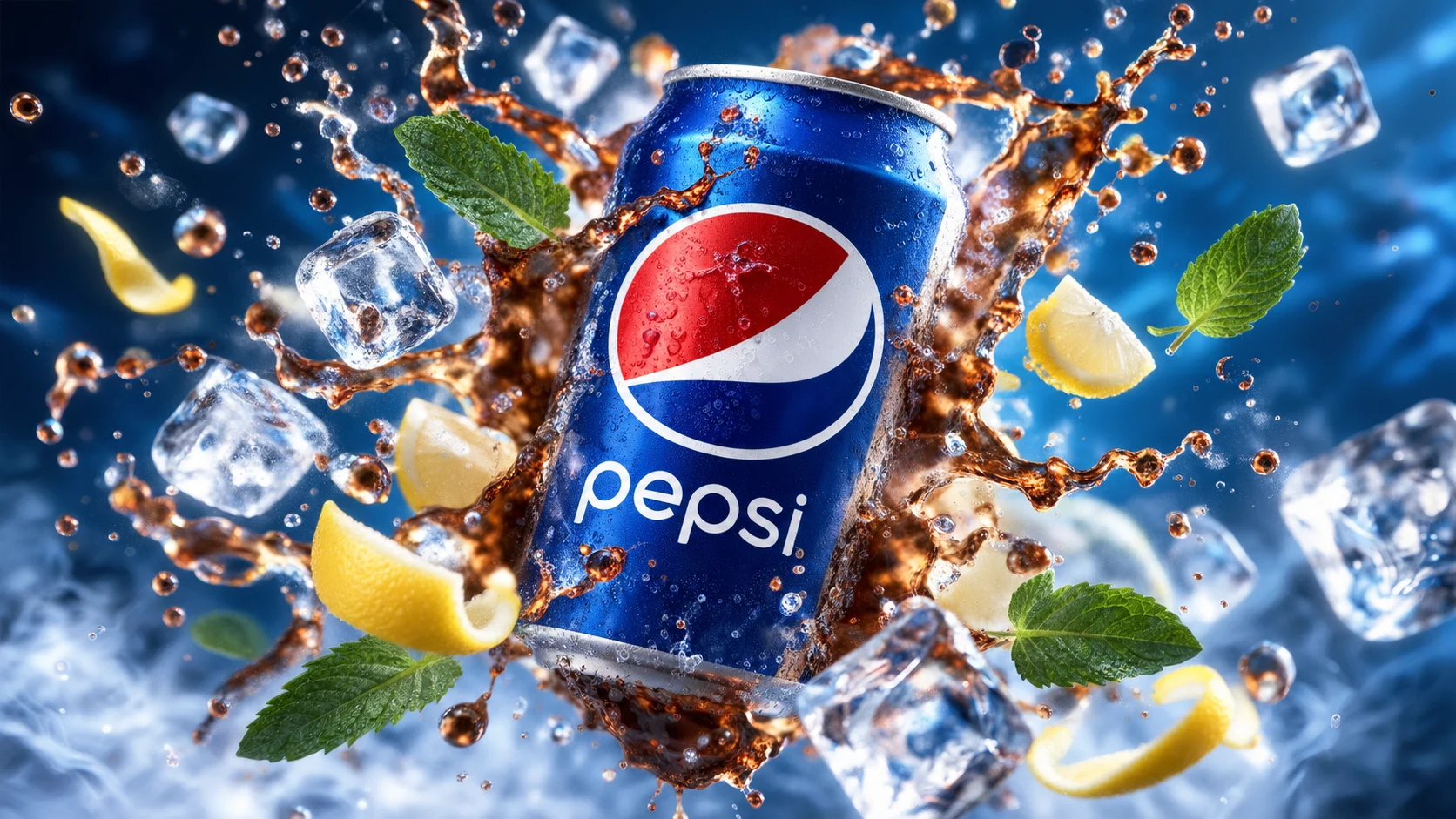
Pepsi Splash Ad
A beverage advertising composition built around a central can and a frozen splash. Study how the prompt combines motion, ice, reflections and the surrounding color palette.
Camera: Premium beverage advertising render, 16:9 landscape or 1:1 composition. Place a realistic Pepsi can at the exact center, frozen at the instant of bursting, using a dramatic close-up with a subtle low angle and strong depth through the splash. Scene: Deep electric-blue gradient background with suspended transparent ice shards, airborne lemon peel, green mint leaves, and low drifting mist. Keep the background clean but energetic, with no unrelated objects. Subject: A correctly proportioned Pepsi can with accurate brand colors and recognizable Pepsi branding. The metallic surface has sharp photorealistic detail: cold condensation droplets, crisp reflections, and tiny scratches. Action: The can bursts open from the center, spraying chilled carbonated cola outward. Dense bubbles, liquid splashes, and ice cubes radiate in all directions; droplets, fragments, and fluid trails obey believable physics and create explosive frozen motion. Lighting / Color: Cinematic volumetric lighting, soft lens flare, advanced global illumination, and HDR illumination. Contrast cool electric blue with silver metal, dark cola, transparent ice, yellow lemon peel, and green mint. Realistic shadows, liquid refraction and reflections, Unreal Engine and Octane Render quality, 4K UHD, ultra-detailed surreal high-impact beverage advertising. Negative Prompt: Deformed Pepsi can, incorrect branding, gibberish text, extra logos, watermarks, plastic-looking liquid, missing bubbles, melted ice, distorted lemon peel, duplicated mint leaves, low resolution, blur, flat illustration, cheap 3D, harsh flare edges, blown highlights, cluttered background.
Recorded model: gpt-image-2.5
Composition and adaptation
Create a beverage-advertising focal point around a central can and a frozen splash.
- Centering the can gives the viewer one main subject before reading the surrounding effects.
- Ice, condensation and reflected highlights describe a cold surface; they serve different roles from the background color.
- The splash provides motion around a still product. Keep its direction and silhouette readable rather than covering the label.
How to adapt it: Replace the product reference with a product you can use. Keep the placement first, then test a new background color or a simpler splash as separate changes.
What to inspect: Inspect the brand lettering, can geometry, label position and contact with the liquid. The example is a visual reference, not proof of accurate packaging reproduction.
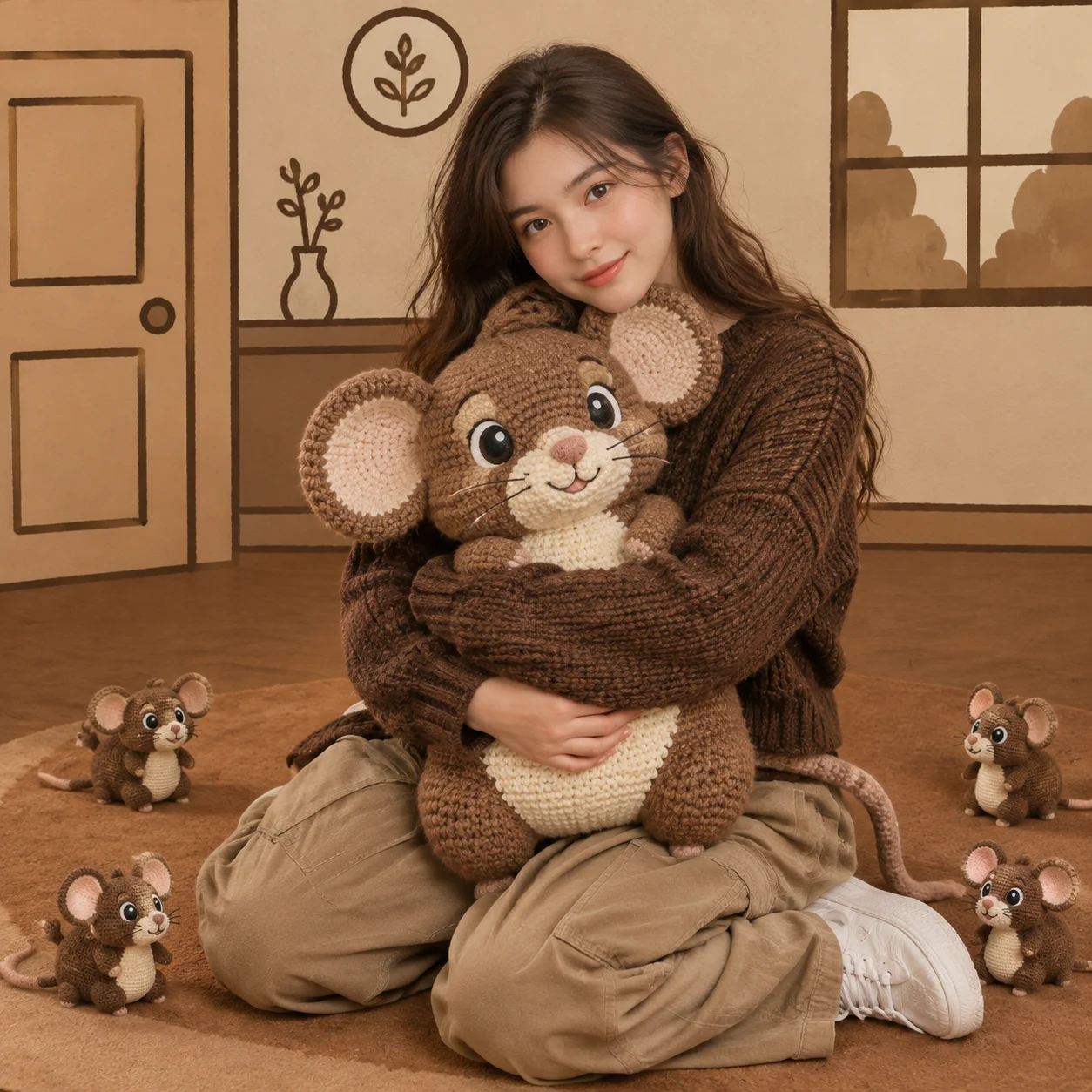
Giant Plush Mouse Product Shot
A product-focused presentation of a plush character. Compare the treatment of soft material and product scale with the reflective surfaces in the beverage example.
Camera Create a photorealistic, warm portrait with a simple composition. Keep the woman and the large crocheted mouse as the sharp focal point. Render the subject and plush toy as realistic photography against a flat, hand-drawn room set, creating a clear and playful contrast between realistic foreground and illustrated background. Use the small toys as supporting composition elements; keep the scene tidy and well layered. Scene A monochromatic hand-drawn room in shades of brown and cream. Draw a doodle door, a simple window, a vase outline, and circular decorations on the walls in black linework. Separate the floor and walls with light and dark brown tones to create a warm, minimal stage-like setting. Subject A beautiful young woman with long, flowing dark-brown hair and a few naturally messy flyaways. She wears a thick brown knit sweater, light-brown cargo pants, and white sneakers. Her features look natural and harmonious; her expression is soft and calm. Preserve fine realistic skin texture and clearly show the sweater fibers and knit pattern. Action She kneels in the center of the room, naturally hugging a large crocheted plush mouse with both arms. The mouse has a brown body, cream-colored belly, light-brown inner ears, large expressive cartoon eyes, and a cheerful, lovable expression. Clearly render authentic crochet loops, yarn fuzz, seams, and soft stuffing. Show natural compression where her arms press into the plush toy. Scatter several smaller crocheted mice of matching design and varied sizes on the floor, surrounding the subject without obscuring her. Lighting / Color Use soft, warm diffused indoor light with subtle natural contact shadows. Keep the palette to warm shades of brown and cream. The mood is cozy, quiet, and natural. Keep the woman's face, sweater knit, and large toy's crochet detail crisp and sharp. The illustrated background remains flat and simple, never competing with the subjects. Negative Prompt Cartoon-like woman, excessive AI appearance, plastic or waxy skin, excessive smoothing, missing skin texture, missing crochet texture, toy fused to the woman, incorrect fingers, extra limbs, unnatural embrace, inaccurate fabric texture, cluttered background, photorealistic room background, hand-drawn set rendered as dimensional objects, out-of-focus subjects, blur, low resolution, text, watermark, unintended logo.
Recorded model: gpt-image-2.5
Composition and adaptation
Show a large plush product through its scale relative to the person and its tactile surface.
- The person and plush share the focal area, making their relative scale central to the image.
- Crocheted and soft material needs visible texture and gentle transitions rather than metallic specular highlights.
- A plain background reduces competition with the two subjects and makes their contact easier to read.
How to adapt it: Describe the toy’s actual construction and its position beside the person. Test product scale separately from background and light, preserving one clear visual relationship.
What to inspect: Inspect the hands, toy proportions, contact points and stitching. Do not assume a generated plush shape matches a manufacturable product.
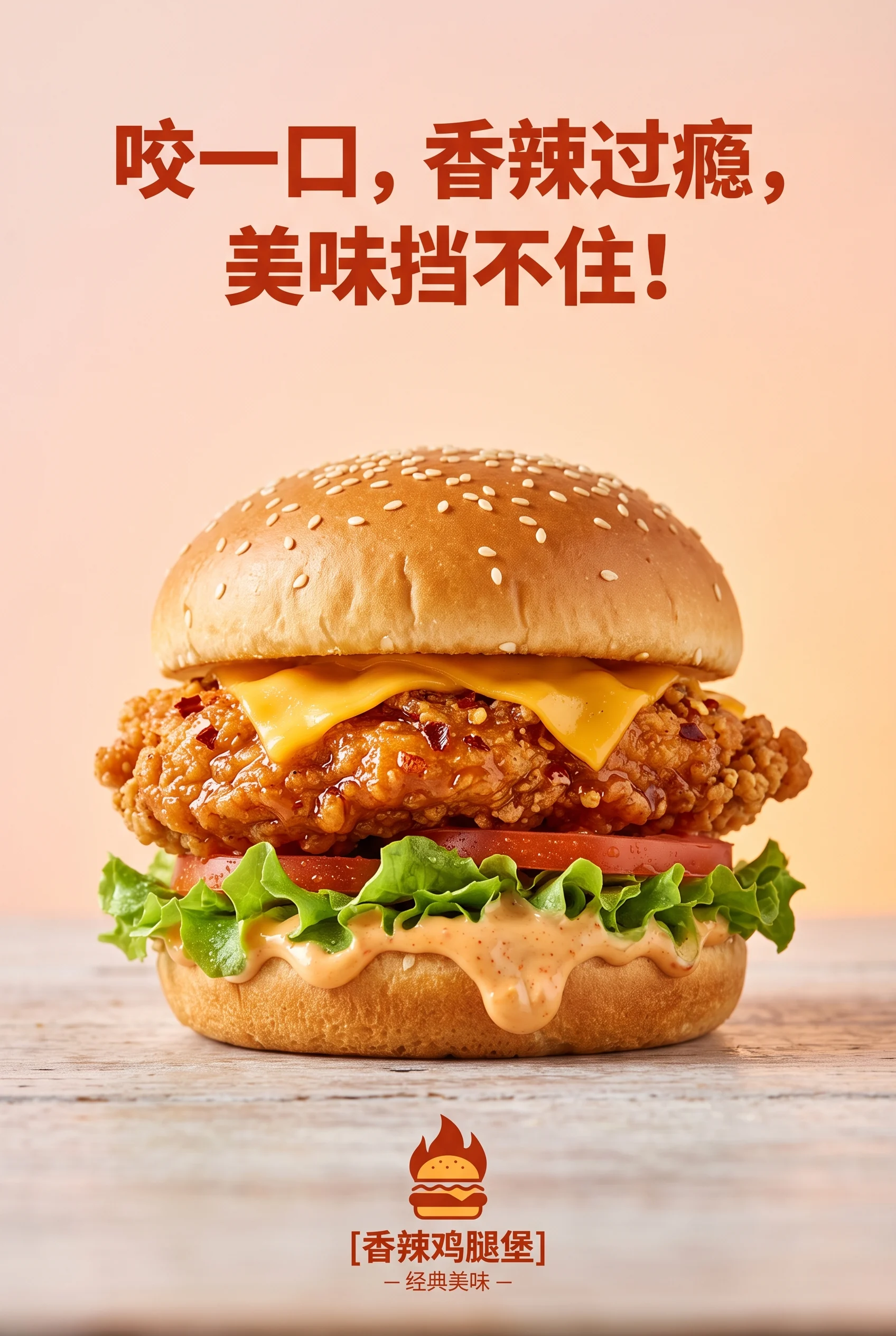
Mouthwatering Food Advertisement
A food advertising example. Use its prompt to explore how presentation, texture and lighting contribute to an appetizing commercial image.
a vertical 2: 3 high-resolution food advertisement featuring the most iconic and delicious product from a well-known brand called INSERT BRAND NAME. The product appears centered with mouthwatering details — such as melted cheese; dripping chocolate; whipped cream; or condensation — depending on the product. The background should be a gradient or pastel tone inspired by the brand’s identity. At the top; display a bold slogan in a color that matches the brand’s style. At the bottom; include the official logo of the brand. Use cinematic studio lighting; soft shadows; and ultra-sharp textures to create a visually irresistible and minimal poster.
Recorded model: gemini-web-image
Composition and adaptation
Build a vertical food advertisement around one clearly presented branded food product.
- The original prompt asks for a vertical 2:3 frame, leaving room to arrange a product-focused advertisement.
- Its centered food subject relies on visible texture and appetizing detail, not merely the word “delicious”.
- The brand-name placeholder is an instruction to customize the subject, not an existing verified product identity.
How to adapt it: Replace the brand placeholder with your own food description. Specify the surface texture, serving arrangement and intended framing, then change only one lighting condition.
What to inspect: Inspect food structure, packaging text and any claims before commercial use. This case supplies an English original; no Chinese prompt is invented for it.
Explore more prompts
Cinematic and photorealistic portrait prompts
Browse all examples