
1990s Hong Kong Cinema Portrait
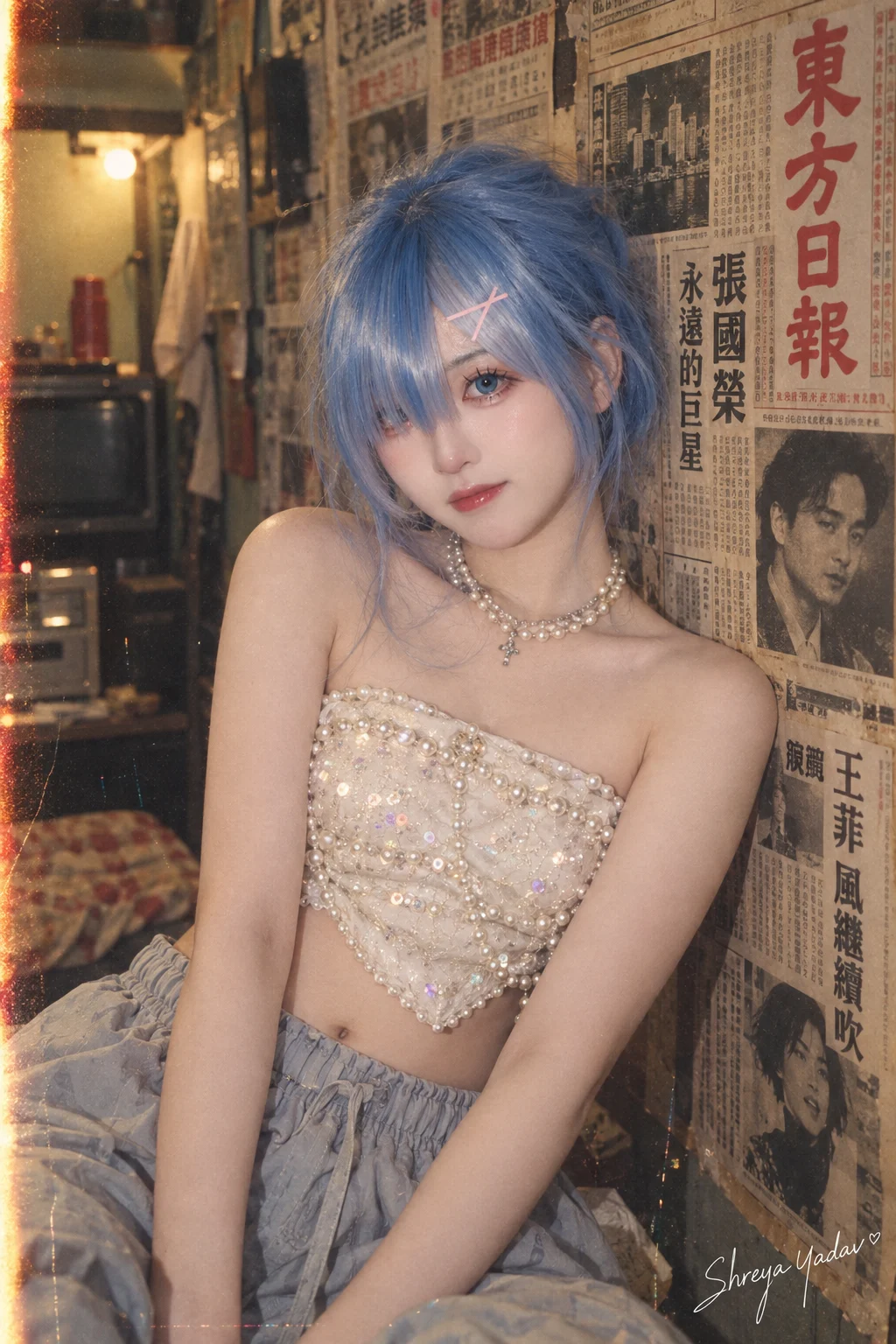
Camera Create a realistic half-body portrait with a 1990s film-cinema feel. Keep the subject sharply focused and soften the background slightly. Use a natural, candid composition w…
Model recorded for this example: gpt-image-2.5
Complete prompt
Camera Create a realistic half-body portrait with a 1990s film-cinema feel. Keep the subject sharply focused and soften the background slightly. Use a natural, candid composition with the texture of a vintage film still. Scene A narrow Hong Kong room with walls covered in yellowed old Cantonese newspapers, showing natural creases and age. Keep the setting close and nostalgic while ensuring the subject remains clearly visible, evoking 1990s Hong Kong street and interior culture. Subject Use image 0 as the sole facial identity reference. Preserve the original person's identity, face shape, features, and proportions without reshaping the face. A woman leans against the newspaper-covered wall. Her hair is slightly messy, with a few loose strands falling naturally across her cheeks. Her makeup is refined, her lips glossy, and her skin dewy while retaining natural texture. She wears a cropped strapless top decorated with pearls and sequins, paired with loose high-waisted elastic-waist trousers in a distinctly 1990s street style. Action Frame her from the waist or chest upward as she leans against the newspaper wall. She looks toward or just beside the camera with a soft, melancholy gaze. Keep the pose relaxed and unforced. Add the exact handwritten signature “Shreya Yadav” in one corner; do not add any other new text. Lighting / Color Use soft cinematic indoor lighting with a slight warm cast and natural shadows. Keep colors gently faded and low-saturation, with fine film grain and the soft contrast of 1990s cinema. Pearls and sequins catch restrained highlights; preserve realistic skin tone and newspaper texture. Negative Prompt Identity drift, altered face shape or facial proportions from image 0, reshaped face, excessive smoothing, plastic-looking skin, modern digital-ad aesthetic, oversharpening, strong saturation, pristine newspaper wall, newly generated readable newspaper headlines, incorrect garment construction, exaggerated pose, garbled text, misspelled signature, extra text, watermark, logo.
Results vary by model and settings. Keep the subject and composition, then adjust lighting, materials or background for your own project.
Use promptComposition and adaptation
Describe a half-body portrait with the mood and surface texture of a 1990s cinema still.
- A half-body crop establishes how much gesture and environment can fit in the scene.
- A sharply described person and softened background give the image a focal hierarchy.
- Film texture is a finishing direction; it cannot replace a coherent pose, lighting direction and setting.
How to adapt it: Keep the scene and crop first. Adjust one element such as color temperature or the background location, and compare whether the face remains the focal point.
What to inspect: Inspect facial features, clothing edges and background continuity. A cinematic style label does not identify a real camera or prove the likeness matches a reference.